Is Bali expensive? What a trip actually costs in 2026
Updated November 27, 2026
No, Bali is not expensive for most travelers in 2026, though it is no longer the $15-a-day backpacker bargain people remember from a decade ago. With the Indonesian rupiah trading at Rp 18,394 to the US dollar in late November 2026, a local warung meal runs $1.36 to $2.45, a short Grab scooter ride costs under $2, and a comfortable mid-range day lands around $65 to $136 per person excluding flights.
The catch is that Bali runs on two completely separate price tracks. Eat at family-run warungs, sleep in a guesthouse in Ubud, and ride Grab, and your money stretches further than almost anywhere else in the world. Spend every afternoon on a reserved beach club daybed in Seminyak or Canggu drinking cocktails taxed at 21%, and you can spend Sydney or Los Angeles money before sunset.
Every conversion below uses the November 26, 2026 European Central Bank cross-rate (Rp 18,394 per $1, or $5.44 per Rp 100,000). All prices on this page are researched from current 2026 official government portals, attraction fee schedules, transit tariffs, and public hospitality listings.
What a day in Bali actually costs
Excluding international flights, here is what one person typically spends per day in regular season. Couples splitting a hotel room or villa cut the lodging line roughly in half.
| Style | Per day (IDR) | Per day (USD) | What that gets you |
|---|---|---|---|
| Budget | Rp 500,000 to Rp 900,000 | $27 to $49 | Hostel dorm or simple homestay, local warung meals, scooter rental or GrabBike rides, one temple stop |
| Mid-range | Rp 1,200,000 to Rp 2,500,000 | $65 to $136 | Boutique hotel room, cafe breakfast plus sit-down dinner, GrabCar or shared private driver, paid sights |
| Comfort / splurge | Rp 5,000,000+ | $272+ | Private pool villa in Seminyak, Canggu or Uluwatu, fine dining, beach club daybed, private car all day |
Even the mid-range tier sits noticeably below a regular week in Japan in 2026, lands right alongside Thailand in 2026, and sits way below major Western cities where $136 barely pays for a basic hotel room. Indonesia also sits near the very bottom of our Big Mac Index for travelers ranking, which tracks closely with what local food and transport cost on the ground.
Entry fees before you leave the airport
Two separate government fees apply to most international visitors arriving in Bali in 2026, though visa-exempt passport holders (such as citizens of ASEAN countries like Singapore and Malaysia) skip the first one:
- Indonesia Visa on Arrival (B1 / e-VOA):
Rp 500,000($27.18, £20.74, €24.77, or A$40.97) for a 30-day tourist stay, extendable once for another 30 days. Most Western visitors (including US, UK, EU, Australian, Canadian, and New Zealand passport holders) need this visa, while eligible visa-exempt nationalities enter free for short visits; check your passport's eligibility before paying on the official Indonesian Immigration e-Visa portal (paying online lets you use the airport e-gates, with small card processing fees). - Bali Provincial Tourist Levy:
Rp 150,000($8.15, £6.22, €7.43, or A$12.29) per international visitor, including children and visa-exempt tourists, payable once per entry via the official Love Bali portal or cashless counters at Ngurah Rai Airport.
For VOA travelers, those two official fees add up to Rp 650,000 ($35.34) per person before you even find your driver (visa-exempt travelers pay just the Rp 150,000 / $8.15 Bali levy). Watch out for lookalike visa websites that pop up in search ads and tack hefty service markups onto the exact same .go.id forms.
Is food expensive in Bali?
Local food is absurdly cheap. Western brunch cafes and beach clubs are where food spending quietly climbs.
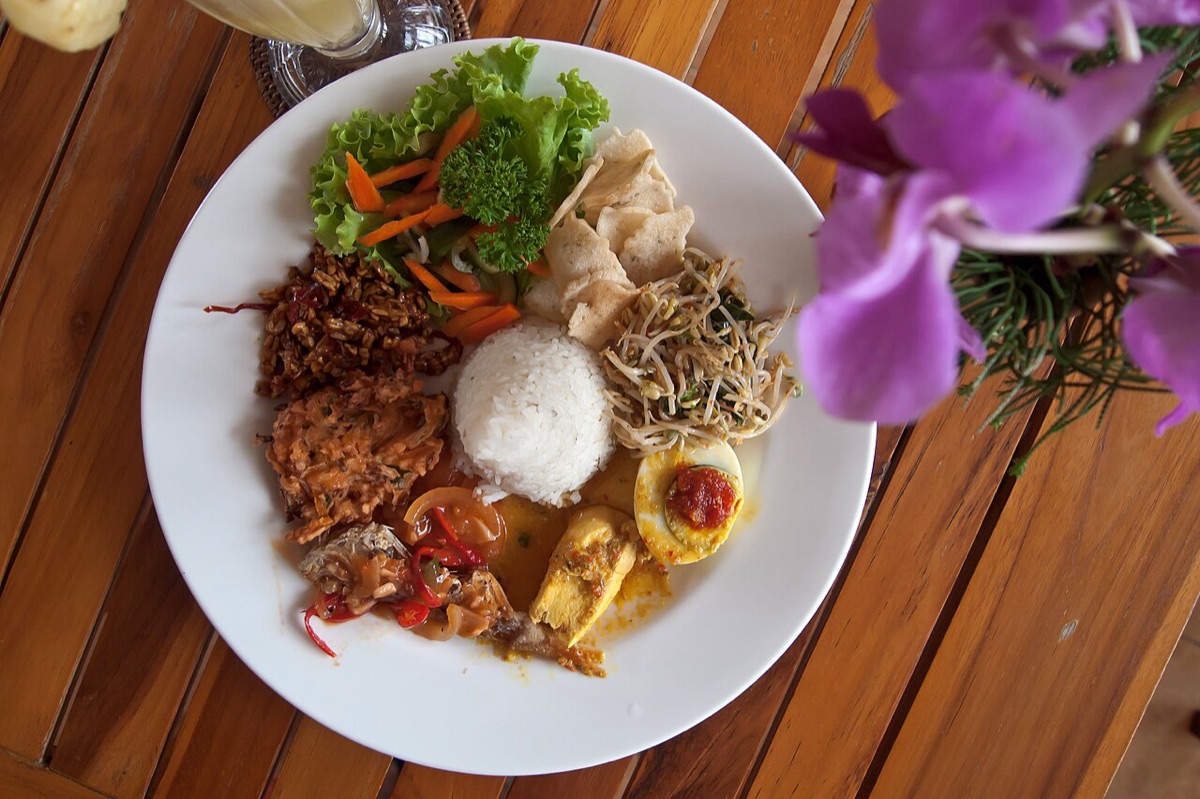
Here is what eating and drinking around Bali costs in 2026:
- Local warungs:
Rp 25,000 to Rp 45,000($1.36 to $2.45) for a full plate of nasi goreng (fried rice), mie goreng (fried noodles), or nasi campur (mixed rice with chicken or tempeh, vegetables, and sambal). Prices are usually nett and cash-only. - Canggu, Ubud, and Seminyak cafes:
Rp 30,000 to Rp 45,000($1.63 to $2.45) for an espresso or iced latte, andRp 60,000 to Rp 110,000($3.26 to $5.98) for avocado toast, smoothie bowls, or big breakfast plates. - Mid-range sit-down dinners:
Rp 150,000 to Rp 300,000($8.15 to $16.31) per person for a main dish and drink at an international restaurant in Seminyak, Canggu, or central Ubud. - Beach clubs: Daytime walk-in entry at big venues like Potato Head in Seminyak or Finns in Canggu is often free if you do not book a lounger. Potato Head charges a
Rp 200,000($10.87) sunset cover from 4:00 PM to 6:30 PM that goes toward a selected drink, while reserved poolside daybeds at major clubs typically start atRp 1,000,000 to Rp 2,000,000+($54 to $109+) in minimum spend or package fees for a group.
Watch for the "++" on tourist menus
Many cafes, restaurants, hotels, and beach clubs print ++ next to their prices. That shorthand means two separate charges get stacked onto your bill, and they compound:
- A service charge set by the venue (usually 5% to 10%).
- PBJT government tax of 10% (Indonesia's regional tax on food, drinks, and hotels), calculated on top of the food plus service subtotal.
So a Rp 100,000 ($5.44) meal with 10% + 10% does not cost Rp 120,000. It becomes Rp 110,000 after service, then 10% tax hits that Rp 110,000, landing at Rp 121,000 ($6.58), a clean 21% jump. Menus that say nett already include everything. Because service is already baked into ++ bills, extra tipping is optional, though rounding up a few notes for good service at a warung or for a driver is always appreciated.
Hotels, homestays, and private pool villas
Bali has one of the widest spreads in hotel pricing on Earth. You can sleep in a clean, family-run Balinese homestay for $14, or you can spend $326+ a night on a private pool villa overlooking Uluwatu.
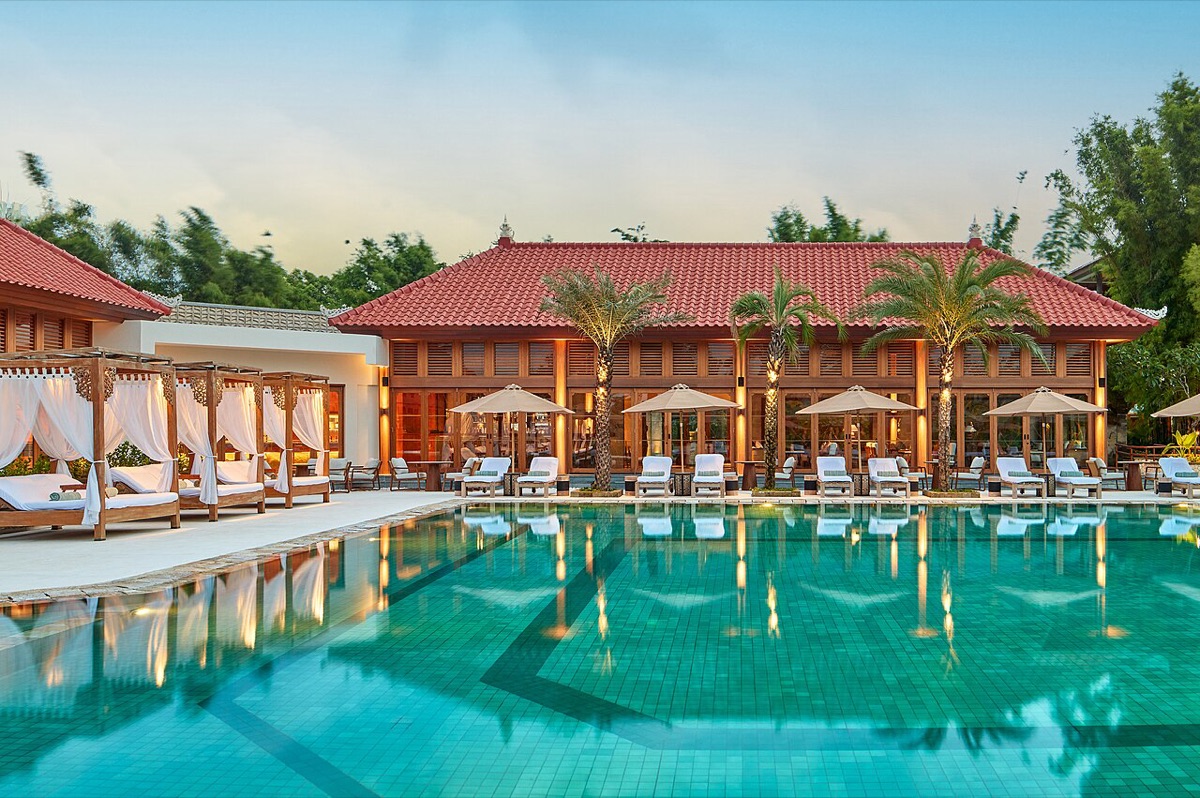
Typical regular-season 2026 nightly rates across the island:
- Hostel dorm beds:
Rp 100,000 to Rp 160,000($5.44 to $8.70) a night. - Budget guesthouses and homestays (private room):
Rp 250,000 to Rp 700,000($14 to $38) a night, often with breakfast and a small shared pool. - Mid-range boutique hotels:
Rp 900,000 to Rp 2,300,000($49 to $125) a night. Ubud usually delivers the best value per dollar, while Seminyak and prime Canggu run higher. - Private 1-to-2-bedroom pool villas:
Rp 2,500,000 to Rp 6,000,000+($136 to $326+) a night, scaling much higher for luxury estates in Seminyak and Uluwatu.
Timing matters a lot. During peak dry season (July and August) and the Christmas/New Year rush (mid-December to early January), popular hotels and villas routinely jump 30% to 60%. January through March is rainy season and brings the lowest rates of the year. Always check whether the booking quote includes the 10% to 21% tax and service fees before comparing rooms.
Getting around: Grab, scooters, taxis, and drivers
Bali has no metro or island-wide train system, so every trip moves on two wheels or four. Luckily, rides are cheap, even when South Bali traffic crawls.
- GrabBike and Gojek scooters:
Rp 15,000 to Rp 30,000($0.82 to $1.63) for short hops around Canggu, Seminyak, or Ubud. Often twice as fast as a car during rush hour. - GrabCar and GoCar:
Rp 40,000 to Rp 100,000($2.17 to $5.44) for short cross-town trips, depending on traffic and surge pricing. Note that some local village transport zones (banjar) restrict ride-hailing pickups directly at temples, harbors, or beaches, so you may need to walk a couple minutes down the road to meet your driver. - Bluebird metered taxis: The light-blue Bluebird cabs are the trusted metered fleet in South Bali, starting at
Rp 7,000($0.38) flagfall plusRp 6,500($0.35) per kilometer, with aRp 30,000($1.63) minimum fare. - Airport transfers (Ngurah Rai DPS): Grab and Gojek operate official airport pickup zones. Typical app fares run
Rp 130,000 to Rp 200,000($7.07 to $10.87) to Seminyak or Sanur,Rp 180,000 to Rp 300,000($9.79 to $16.31) to Canggu or Uluwatu, andRp 200,000 to Rp 350,000($10.87 to $19.03) to Ubud. Fixed-rate airport taxi counters and pre-booked private transfers typically land betweenRp 150,000 and Rp 500,000($8.15 to $27.18) depending on distance. - Scooter rental and fuel: A standard 110cc to 125cc scooter (Honda Scoopy or Vario) rents for
Rp 70,000 to Rp 100,000($3.81 to $5.44) a day, while larger bikes like a Yamaha NMAX or Honda PCX runRp 120,000 to Rp 250,000($6.52 to $13.59). Official Pertamina Pertamax (RON 92) fuel in Bali sits atRp 15,950($0.87) per liter, so filling a 5-liter tank costs aboutRp 80,000($4.35). Legally, foreign riders need an International Driving Permit with a motorcycle endorsement; without it, traffic fines and voided travel insurance get expensive fast. - Full-day private car and driver:
Rp 600,000 to Rp 800,000($33 to $43) for a 10-hour day in a standard air-conditioned MPV with fuel and parking included. That is per vehicle, not per person, making it the easiest bargain on the island for two to four travelers doing temple or waterfall loops. - Fast boat to Nusa Penida:
Rp 150,000 to Rp 250,000($8.15 to $13.59) one-way from Sanur Harbor (orRp 250,000 to Rp 350,000/ $13.59 to $19.03 round-trip booked online), plus theRp 25,000($1.36) local port retribution fee on arrival.
Temples, rice terraces, and sightseeing fees
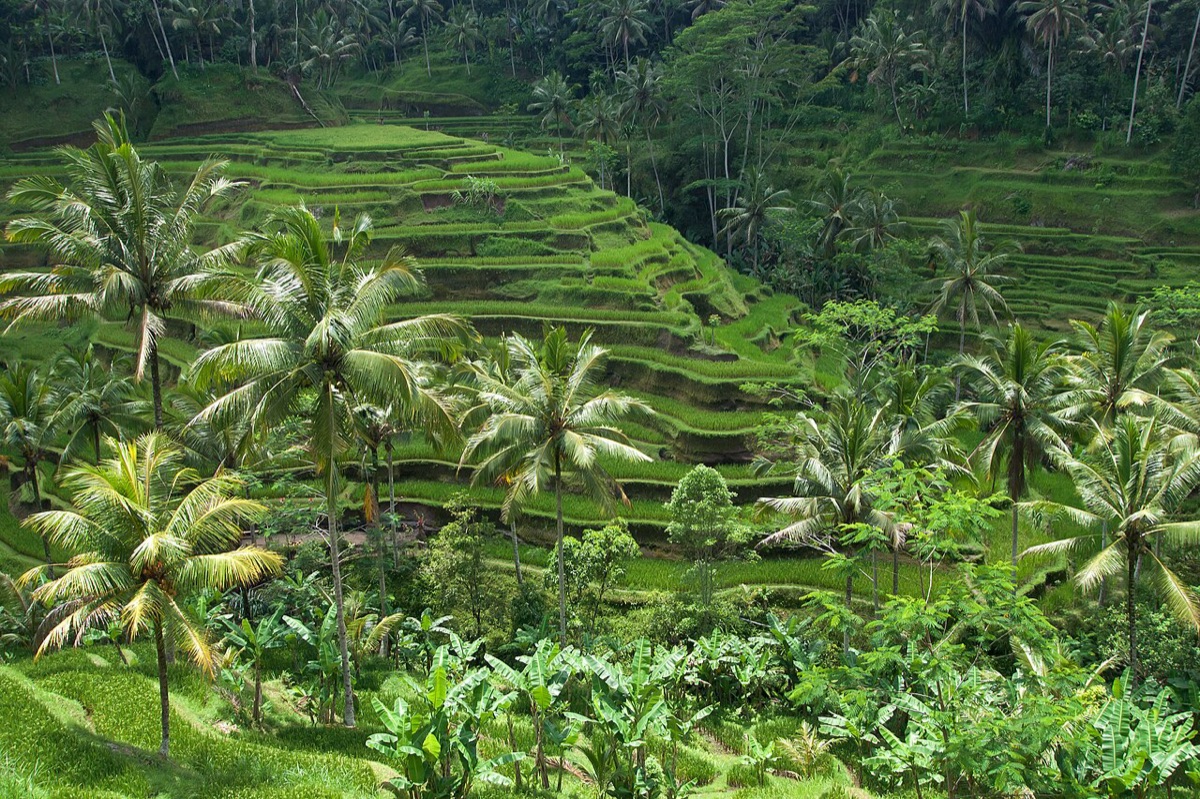
Entrance tickets have crept up over the past two years, especially at Bali's marquee landmarks, though they still sit around $3 to $8 each in US dollars.
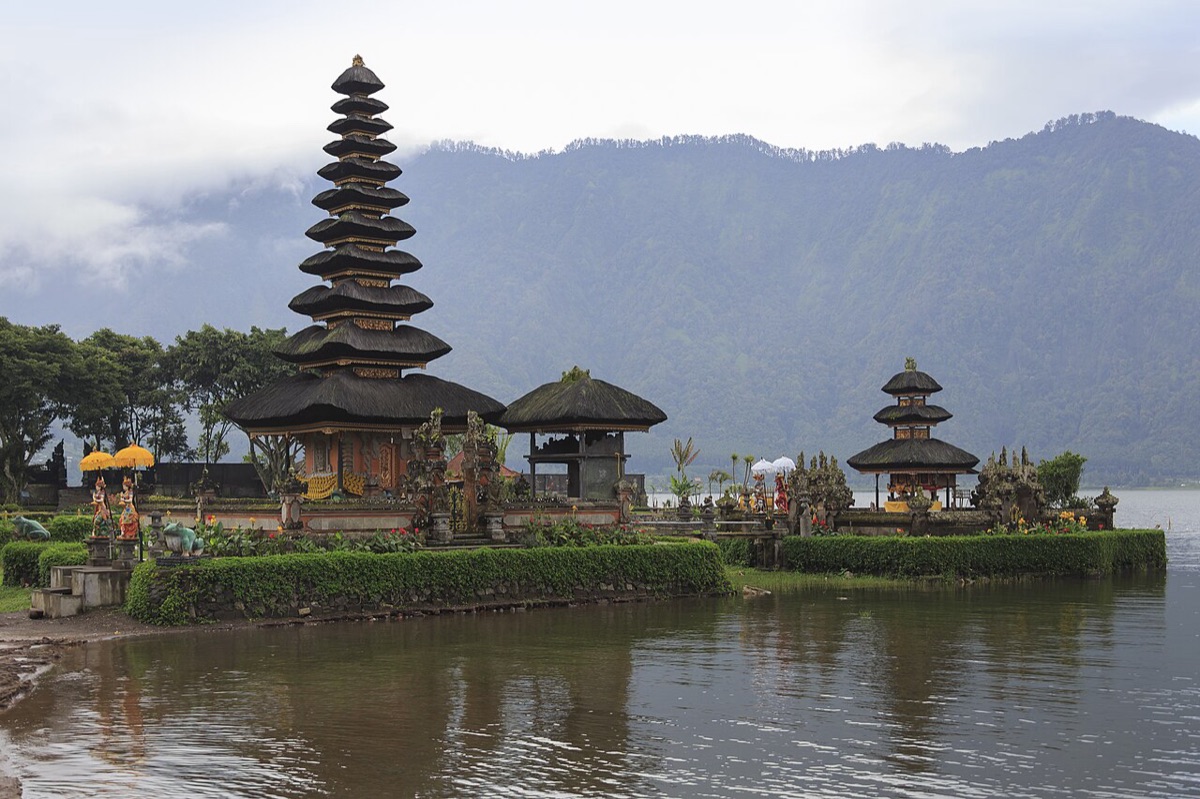
Current 2026 international adult entrance fees at major Bali sights:
| Sight | Entrance fee (IDR) | In USD | Notes |
|---|---|---|---|
| Sacred Monkey Forest Sanctuary (Ubud) | Rp 130,000 | $7.07 | Flat adult rate since April 2026; children 3 to 12 pay Rp 100,000 ($5.44) |
| Pura Ulun Danu Beratan | Rp 100,000 | $5.44 | Updated July 2026 foreign adult ticket for the Lake Beratan water temple |
| Tanah Lot Temple | Rp 75,000 | $4.08 | Separate small parking fee if arriving by scooter or car |
| Uluwatu Temple | Rp 60,000 | $3.26 | Sunset Kecak fire dance is a separate Rp 150,000 ($8.15) ticket |
| Besakih Temple (Mother Temple) | Rp 150,000 | $8.15 | Bundles sarong rental, shuttle, and local guide |
| Tegallalang Rice Terrace | Rp 25,000 to Rp 50,000 | $1.36 to $2.72 | Base trail/viewpoint entry; photo swings and cafes charge extra |
Rupiah zeros, ATMs, and the easiest way to lose money
Handling Indonesian rupiah is genuinely disorienting on day one. The largest banknote is the red Rp 100,000 bill, worth just $5.44 on November 26, 2026, which means withdrawing $54 turns you into a technical millionaire carrying ten crisp bills.
Three quick habits stop the zeros from tripping you up:
- Read dots as commas, and "k" or "rb" as thousand: Indonesian price tags write seventy-eight thousand rupiah as
Rp 78.000,78k, or78rb(ribu means thousand). That is $4.24, not seventy-eight bucks. - Use a clean mental anchor: Drop three zeros and divide by 18 for US dollars, 12 for Australian dollars, 20 for euros, or 24 for British pounds.
- Always decline ATM and card conversion: Use an ATM attached to a bank branch and check the fee before confirming. Bank Mandiri charges
Rp 100,000($5.44) per withdrawal with a foreign-issued Visa or Mastercard. Foreign-issued JCB and China UnionPay cards are exempt from Mandiri's fee. Watch closely after taking your money: many Indonesian ATMs hand you the cash first and eject your card second, which is how travelers leave cards behind every day. And whenever any ATM or card terminal asks to bill you in USD, AUD, GBP, or EUR instead of IDR, always decline. We break down why that single tap costs 3% to 10%+ in our guide on paying in local currency vs. USD.
Here is what Rp 100,000 and Rp 1,000,000 equal across five major visitor currencies as of November 26, 2026:
| Currency | Rp 100,000 | Rp 1,000,000 |
|---|---|---|
| US Dollar (USD) | $5.44 | $54.37 |
| British Pound (GBP) | £4.15 | £41.49 |
| Euro (EUR) | €4.95 | €49.54 |
| Australian Dollar (AUD) | A$8.19 | A$81.93 |
| Canadian Dollar (CAD) | C$7.74 | C$77.36 |
What can still make Bali expensive
Bali stays cheap if you let it, and gets pricey fast if you do not pay attention to five things:
- Long-haul flights. Economy flights from Australia can be cheap, while round-trip flights from the US or Europe easily hit $900 to $1,500+ and dwarf your ground budget.
- Peak-season villas. Booking Canggu, Seminyak, or Uluwatu last minute in July, August, or late December adds 30% to 60% to nightly rates.
- Beach club daybeds and imported alcohol. Local Bintang beer is affordable, but Indonesia taxes imported wine and spirits heavily. Two rounds of cocktails plus a daybed minimum spend and 21%
++can surpass three nights at a guesthouse. - Airport touts and street money changers. Skip street kiosks advertising suspiciously high exchange rates with no commission; stick to bank-branch ATMs or authorized money changers like BMC and Central Kuta.
- Dynamic Currency Conversion. Tapping "Pay in AUD" or "Pay in USD" on a villa bill or ATM screen quietly surrenders 5% to 10% for nothing.
Before you go
A few tools and guides to bookmark before your flight:
- Print a wallet card: Our Bali rupiah cheat sheet gives you dated conversions for Rp 100,000, Rp 500,000, and everyday amounts in USD, AUD, GBP, EUR, and more.
- Avoid the card-machine markup: Read should I pay in local currency or USD? before tapping a card terminal or using a Bali ATM.
- Test your own numbers: Run any villa rate or driver quote through our travel currency calculator, or see how Indonesia stacks up against 29 other destinations in the Big Mac Index for travelers.
Or let your phone handle the rupiah zeros at the table. Point Kahei's camera at a menu price like Rp 78.000 or type an amount in, and it converts into your home currency right away using saved daily rates, even when your eSIM drops out in the Ubud hills.
Euro reference rates from the European Central Bank; cross-rates calculated by Kahei.