How much cash to bring to Japan in 2026 (ATMs, cards and IC cards)
Updated November 25, 2026
Plan on ¥30,000 to ¥50,000 ($189 to $314) in cash per person for a one-week trip to Japan, assuming your hotels and major train tickets go on a credit card. Japan takes cards far more widely than it used to, yet plenty of small restaurants, shrines, markets and neighborhood shops are still cash-only.
You do not need to fly in carrying all of that yen from home. Pulling cash from a 7-Eleven ATM after you land is almost always cheaper and simpler than visiting an exchange counter before your flight.
Dollar, pound, euro and Australian dollar figures below use the November 24, 2026 European Central Bank reference rate of ¥159.07 per $1 (about $6.29 per ¥1,000).
How much cash you actually need by trip length
How much money to bring to Japan depends mostly on two things: whether you use an iPhone for Apple Wallet Suica, and how often you eat at small family-run spots instead of malls and chains.
| Trip length | Recommended cash (per person) | USD | GBP | EUR | AUD |
|---|---|---|---|---|---|
| 3 to 4 days | ¥15,000 to ¥25,000 | $94 to $157 | £72 to £120 | €86 to €143 | A$142 to A$237 |
| 1 week (7 days) | ¥30,000 to ¥50,000 | $189 to $314 | £144 to £240 | €172 to €287 | A$284 to A$473 |
| 2 weeks (14 days) | ¥60,000 to ¥90,000 | $377 to $566 | £288 to £432 | €344 to €516 | A$568 to A$852 |
In practice, that works out to roughly ¥4,000 to ¥7,000 ($25 to $44) in cash per day on top of whatever goes onto your credit card. A good daily habit is keeping at least one ¥10,000 ($63) bill in your wallet at all times, then hitting an ATM again whenever your wallet dips below that.
One adjustment to make before you calculate your number: if you use an Android phone bought outside Japan, you will load your physical transit IC card with cash at station machines. Add ¥5,000 to ¥10,000 ($31 to $63) per week to the table above if you are topping up a plastic Suica or PASMO with yen notes.
Is Japan cashless? Cash vs. card in 2026
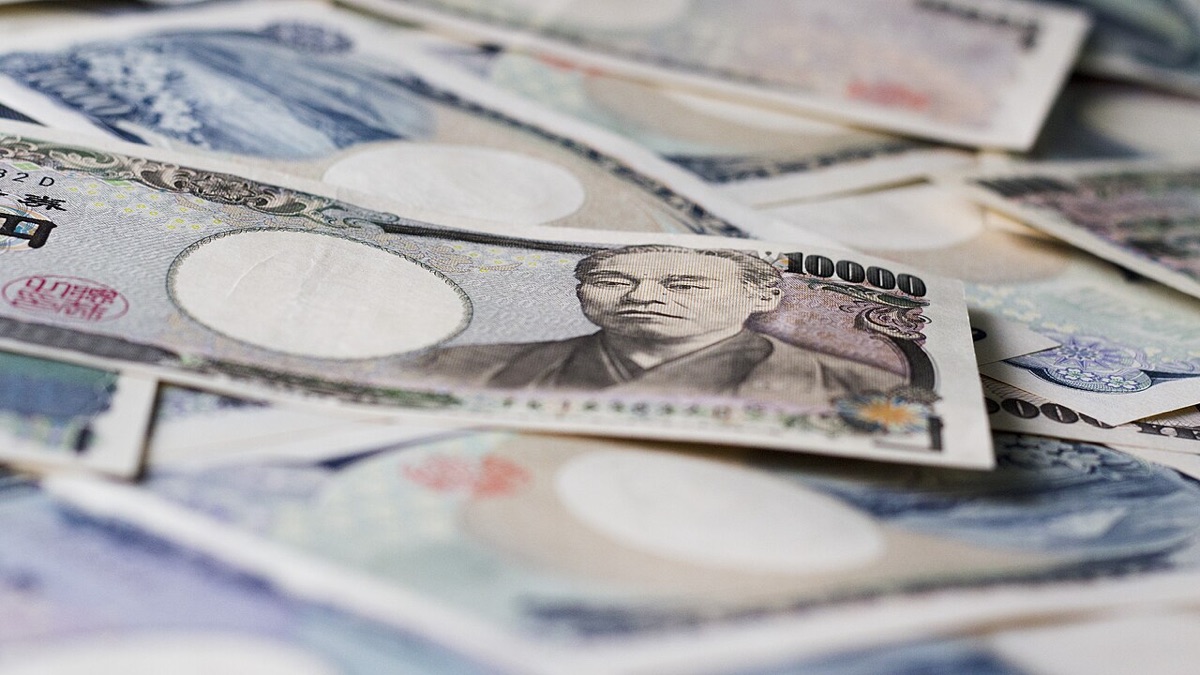
No. Japan is much closer to a hybrid system than a cashless one. According to Japan's Ministry of Economy, Trade and Industry (METI), cashless spending reached 42.8% of consumer payments in 2024 and climbed to 58.0% under its revised 2025 domestic measure, with credit cards making up over four-fifths of that cashless slice. That still leaves roughly half of everyday spending happening in bills and coins.
On our ten-day trip across Yokohama, Kanazawa, Shirakawa-go, Toyama and Tokyo, we tapped our credit card at hotels, department stores, malls and convenience stores without a single issue. Then we would walk two blocks to lunch and run straight into a cash-only register.
- Bondy in Jimbocho (Tokyo): One of Tokyo's most famous curry spots, serving European-style curry in a silver gravy boat for ¥1,700 ($11). Right at the top of the laminated menu sits a neat sticker with a crossed-out card icon: Cash Only.
- Our Kanazawa seafood lunch: We ordered a crab, sweet shrimp and salmon roe bowl (¥4,200) plus a tuna bowl (¥2,900) near Omicho Market. Total came to ¥7,100 ($45) in cash, which wiped out most of a ¥10,000 note before 1pm.
- Yamamoto no Hamburg (Naka-Meguro): Two hamburg steaks, a salad and fried chicken ran ¥4,910 ($31), paid in cash.
We logged all 17 meals from that trip in our Japan meal cost guide, and cash showed up on receipts far more often than we expected for 2025 and 2026.
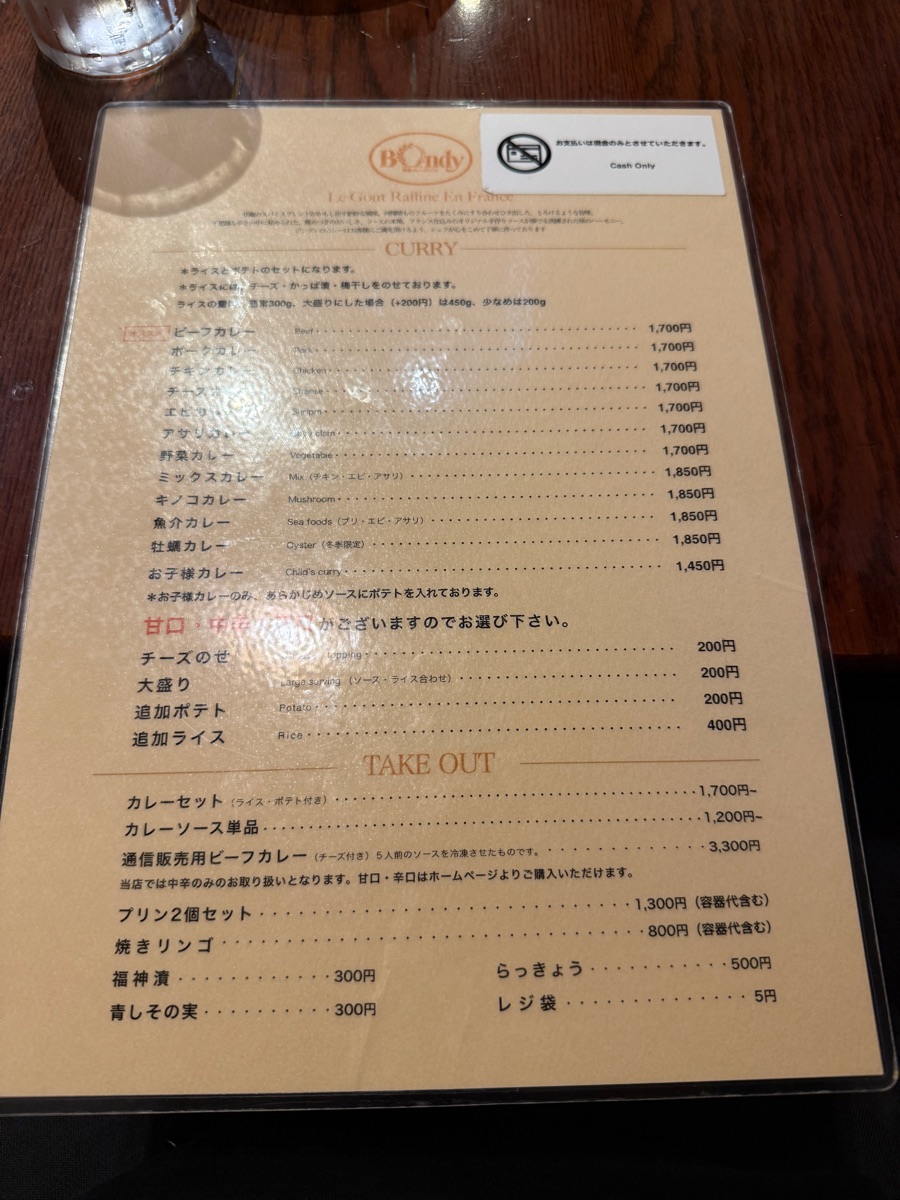
Where cards work almost everywhere
- Hotels, ryokans booked online and airport trains
- Department stores, Uniqlo, Don Quijote, drugstores and electronics chains
- 7-Eleven, Lawson and FamilyMart convenience stores
- Chain restaurants, cafes inside stations and major museums
- Shinkansen ticket machines and JR's Smart EX app
Where you still need cash
- Small ramen shops, curry houses and older izakayas (especially ticket-vending-machine ramen counters, which often take only ¥1,000 bills and coins)
- Shrines and temples (entry fees at smaller temples, wooden fortune slips and offering boxes)
- Street food markets like Omicho in Kanazawa or Nishiki in Kyoto
- Independent bakeries, mom-and-pop souvenir stalls and rural buses outside major cities
- Reloading physical Suica, PASMO or ICOCA cards at train station machines
- Coin lockers at older stations and rural sightseeing spots
The best way to get yen: 7-Eleven and JP Post ATMs
Skip ordering yen from your home bank before departure, and walk past the currency exchange booths in the airport arrivals hall. Home banks and airport kiosks bake a 5% to 10% spread into the exchange rate even when they advertise "zero commission."
Instead, bring a debit card with low or zero foreign ATM fees and pull yen straight from a convenience store ATM after you clear customs. Every major Japanese airport (Narita, Haneda, Kansai, Fukuoka) has ATMs right in the arrivals lobby.
7-Eleven (Seven Bank) ATMs: your default stop
There are tens of thousands of 7-Eleven stores across Japan, and virtually every one has a Seven Bank ATM inside. They speak English (plus 11 other languages), run 24 hours a day, 365 days a year for Visa and Mastercard, and accept overseas chip cards up to ¥100,000 ($629) per withdrawal (magnetic stripe cards cap at ¥30,000).
Seven Bank's ATM operator fees for foreign-issued cards depend on the card network:
| Card network | Seven Bank ATM fee | Per-withdrawal limit |
|---|---|---|
| Mastercard, Maestro, Cirrus | ¥0 | ¥100,000 (chip) / ¥30,000 (stripe) |
| Visa, Visa Electron (under ¥10,000) | ¥110 ($0.69) | ¥100,000 (chip) / ¥30,000 (stripe) |
| Visa, Visa Electron (¥10,000+) | ¥220 ($1.38) | ¥100,000 (chip) / ¥30,000 (stripe) |
| American Express | ¥220 ($1.38) | ¥100,000 (chip) / ¥30,000 (stripe) |
Two small tricks make 7-Eleven ATMs even better:
- Ask for ¥1,000 bills when you can. Seven Bank machines let you withdraw in ¥1,000 increments (for example, choosing ¥10,000 as ten ¥1,000 notes, or pulling ¥19,000 instead of ¥20,000 so the machine is forced to give you nine ¥1,000 bills). Breaking a crisp ¥10,000 note at a tiny ramen ticket machine at 8am is a fast way to make an enemy.
- Remember your home bank's fee is separate. Seven Bank's ¥0 or ¥220 fee is only the Japanese ATM operator's cut. Check whether your home debit card charges a flat $3 to $5 international withdrawal fee or a 3% foreign transaction fee before you fly.
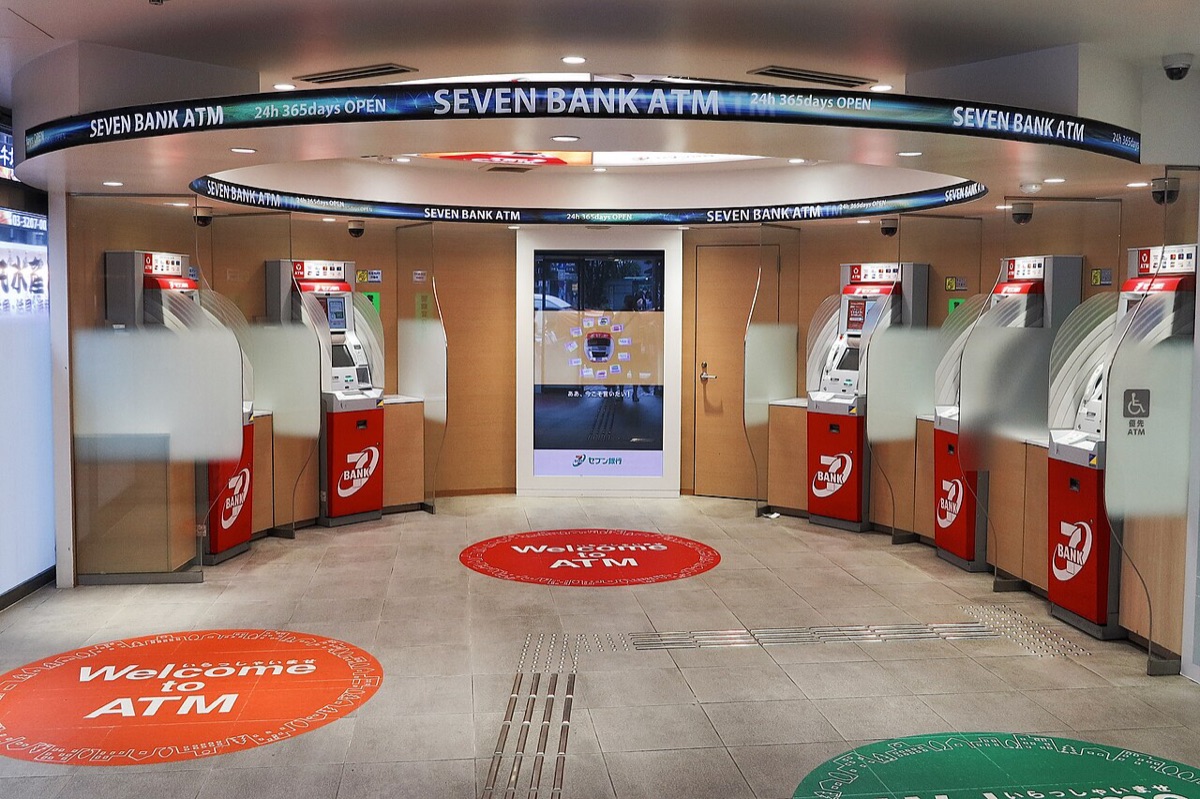
Japan Post Bank (Yucho) ATMs: the reliable backup
If you are in a smaller town without a 7-Eleven on the corner, look for a post office (the red T-shaped 〒 logo) or a FamilyMart with a green Japan Post Bank (Yucho) ATM.
- Accepted cards: Visa, PLUS, Mastercard, Maestro, Cirrus, JCB, UnionPay and Discover.
- ATM fee: Up to ¥220 ($1.38, tax included) per withdrawal for foreign-issued cards.
- Withdrawal limit: ¥50,000 ($314) per transaction. Balance inquiries do not work on overseas cards.
- Hours: Post office branches run 7:00am to 11:00pm Monday through Saturday, and 7:00am to 9:00pm on Sundays and public holidays. Compact JP Post ATMs inside FamilyMart stores run 0:05am to 11:55pm most days (starting at 7:00am on the third Monday of the month).
One screen that quietly costs you 5%: always choose JPY
Halfway through a Japanese ATM withdrawal (and occasionally on a hotel or store card terminal), the screen will offer to charge you in your home currency (USD, GBP, EUR or AUD) instead of Japanese yen, showing a "guaranteed" conversion rate right on screen.
Always decline and choose Japanese Yen (JPY). That home-currency offer is Dynamic Currency Conversion (DCC), and the machine's exchange rate typically carries a 3% to 8% markup over Visa or Mastercard's network rate. Letting your own bank convert the yen almost always wins. We broke down the exact math (and how to spot the ATM wording trap) in should I pay in local currency or USD?.
IC cards (Suica, PASMO, ICOCA): the shortcut that cuts your cash needs in half
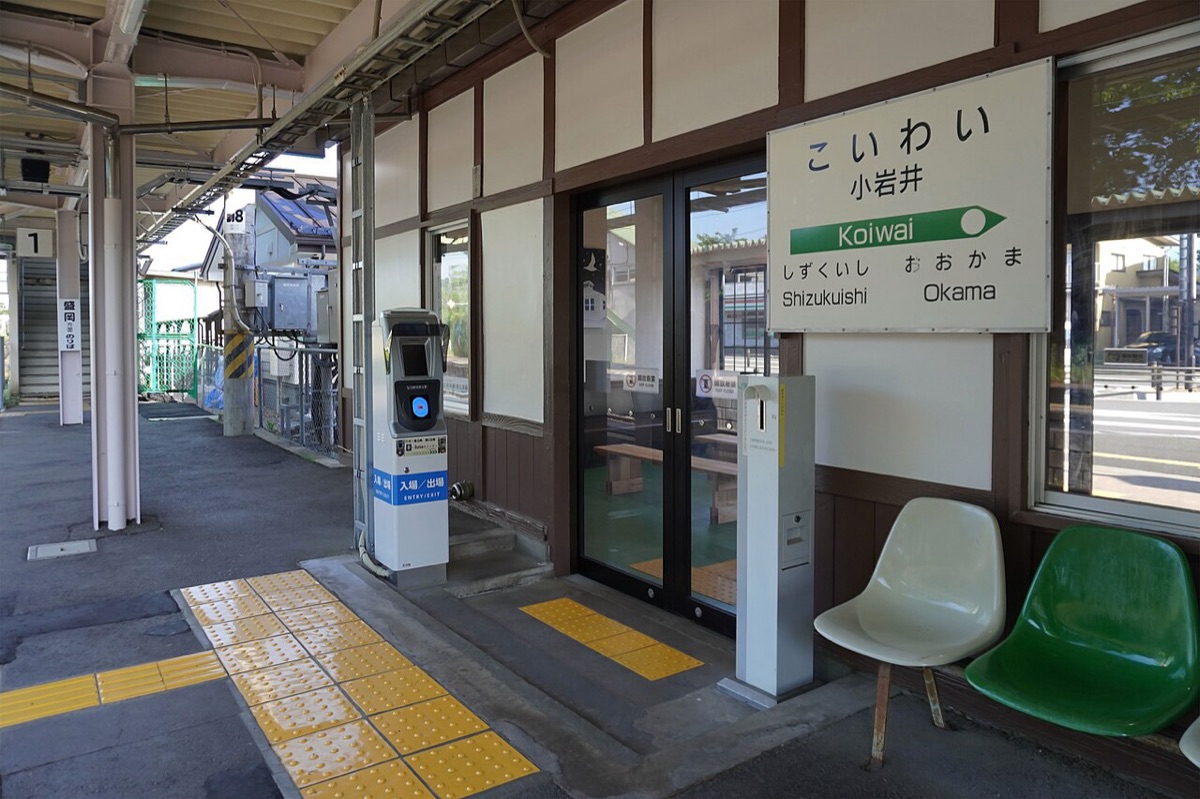
A Japanese transit IC card is the single easiest way to shrink how much paper cash you burn through each day. Suica (Tokyo/JR East), PASMO (Tokyo private lines) and ICOCA (Osaka/Kyoto/JR West) all work interchangeably across Japan's major rail networks, and they double as a tap-to-pay wallet at convenience stores, drink vending machines, station cafes, coin lockers and plenty of chain restaurants.
- If you have an iPhone (iPhone 8 or newer): You do not need a physical card or cash to load it. Open Apple Wallet, tap
+, pick Transit Card, and add a digital Suica, PASMO or ICOCA straight from your phone (Apple Support). Express Mode turns on automatically so you tap the ticket gate without unlocking your screen. On our trip we loaded ¥5,000 (~$32) onto Mobile Suica straight through Apple Pay. Note that Mastercard and Amex reload smoothly in Apple Wallet, while some overseas Visa cards occasionally fail 3D Secure checks, so keep a Mastercard in Apple Wallet as a backup. - If you use an Android phone bought outside Japan: Foreign Android phones generally lack Japan's Osaifu-Keitai hardware chip, so you will buy a physical card after landing. Look for the red tourist Welcome Suica at Haneda or Narita (no ¥500 deposit, valid 28 days, non-refundable) or a standard Suica, PASMO or ICOCA (¥500 refundable deposit). Physical cards can only be topped up with cash at station ticket machines or 7-Eleven ATMs.
- Mind the ¥20,000 ($126) cap: Both digital and physical IC cards hold a maximum of ¥20,000 at once. Load ¥3,000 to ¥5,000 at a time so you do not end up stuck with unused yen on a non-refundable Welcome Suica at the airport.
The Japanese coin pile (and how to get rid of it)
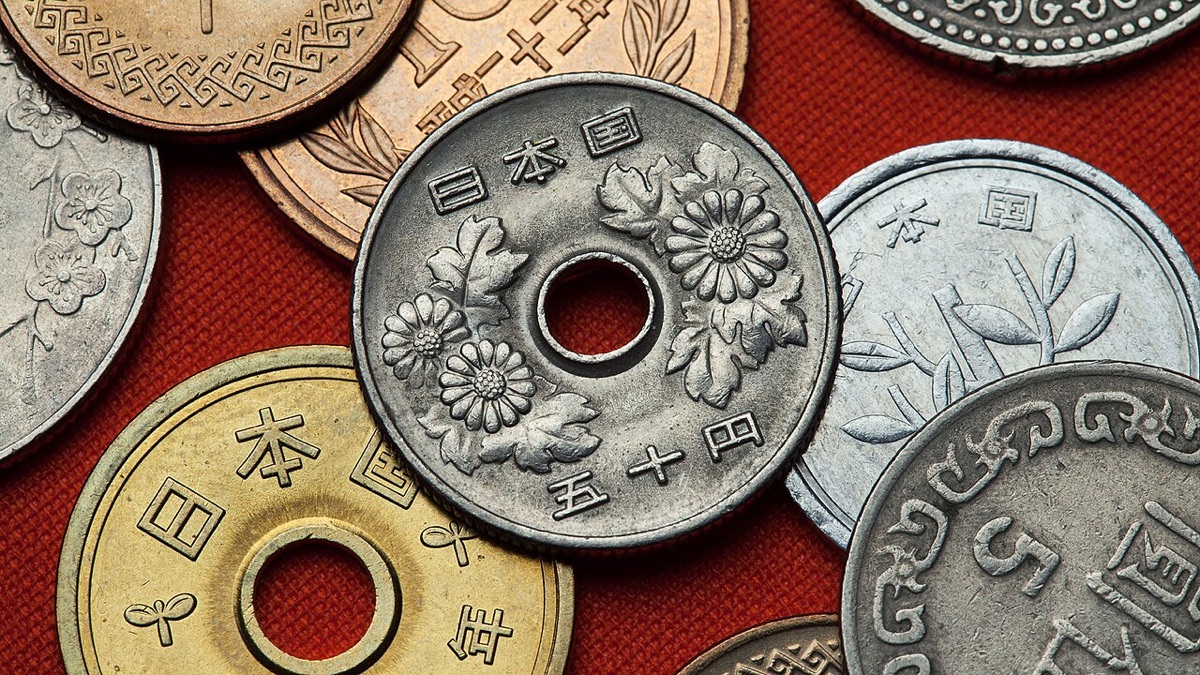
Japan has six circulating coins (Ministry of Finance), and by day three your jeans pocket will feel like you are smuggling hardware store bolts.
| Coin | Value (USD) | How to spot it fast |
|---|---|---|
| ¥1 | $0.01 | Feather-light aluminum, practically floats in water |
| ¥5 | $0.03 | Brass yellow with a hole in the center; lucky at shrines |
| ¥10 | $0.06 | Bronze copper color, smooth edge |
| ¥50 | $0.31 | Small silver coin with a hole in the center |
| ¥100 | $0.63 | Standard silver coin, cherry blossoms on the front |
| ¥500 | $3.14 | Large heavy two-tone/nickel-brass coin; real money |
Three coin habits save a lot of fumbling at the register:
- Respect the ¥500 coin. It is worth over $3. Three of them in your pocket is a full bowl of ramen, not spare change.
- Save a couple ¥5 coins for shrines. In Japanese, five yen is pronounced go-en, which sounds like the word for good fortune or a fated connection. Tossing a ¥5 coin into the wooden offering box (saisen-bako) is the classic move.
- Dump leftover coins into self-checkout machines. Most 7-Eleven, Lawson and supermarket registers now have automated coin hoppers. Pour your entire fistful of ¥1, ¥5 and ¥10 coins in at once, let the machine count them without anyone behind you sighing, and cover the remaining balance with a yen bill (7-Eleven does not let you split cash with a credit card on one purchase, and split card payments vary by store). You can also feed coins (¥10 and up) onto a physical IC card at station recharge machines before you fly home.
Your pre-trip money checklist
Before you zip up your carry-on:
- One no-foreign-transaction-fee credit card for hotels, Shinkansen tickets, malls and convenience stores.
- One debit card for 7-Eleven ATMs (ideally a Mastercard for ¥0 Seven Bank operator fee, or a checking account that reimburses ATM fees). Tell your bank you are traveling if your app still requires travel notices.
- A backup card kept in a separate bag, in case a machine eats or temporarily flags your main card.
- Apple Wallet Suica or PASMO set up before boarding (if you are on iPhone), loaded with ¥2,000 to ¥3,000 so you can walk straight through the airport train gate.
- A small coin pouch, because most slim US and European wallets were never designed for ¥500 coins.
Keep planning your Japan budget
- Wondering what those bills actually buy? Read is ¥1,000 a lot in Japan? for a real breakdown of ¥1,000, ¥5,000 and ¥10,000.
- Want the full trip cost? Our 2026 Japan cost guide covers hotels, Shinkansen math, subways and konbini prices.
- See real receipts: Check what 17 real meals in Japan cost us, including Bondy and Kanazawa, plus how to read two-price Japanese tags.
- Print a wallet reference: Our Japan yen cheat sheet converts ¥100 to ¥50,000 into USD, EUR, GBP, AUD and CAD with a printable card.
Or let Kahei do the yen math while you stand at the counter. Point your iPhone camera at any yen price tag or menu and see it in your own currency live, even when you are offline.
Euro reference rates from the European Central Bank; cross-rates calculated by Kahei.